

Payday Super has changed the rules. So, change how you use the data.
HR and Finance leaders take note. Systems are live, contributions are flowing, and most organisations have cleared the first hurdle, compliance. For many, that was the sole focus in the months leading up to the change. Avoiding the revised Super Guarantee Charge framework, with its significantly higher penalties, was reason enough to act. But treating that deadline as the finish line risks missing the more important shift now underway.
Payday Super has not simply changed when contributions are made. It has changed the rhythm of workforce cost itself. Each pay cycle now produces a complete picture of wages, superannuation, and workforce composition, reported almost immediately through Single Touch Payroll. What was once delayed and reconciled after the fact is now visible as it happens. The gap between a pay event and its reporting has narrowed to the point where delays and inconsistencies show up quickly, and often publicly.
That buffer also allowed fragmented processes to persist. HR, payroll, and finance could operate with different datasets and different timings, relying on reconciliation to bring everything back into line. That approach is far harder to sustain now. When contributions are tied directly to each pay cycle, misalignment between systems is no longer an inconvenience. It becomes a cost, and in some cases, a compliance issue.
What Real-Time Payroll Data Means for Workforce Cost
This is where the opportunity begins. Payroll has always held detailed information about workforce cost, but it has rarely been used at the moment decisions are made. Finance has typically worked from budgets and forecasts, while HR has relied on headcount and reporting snapshots. The two functions have often struggled to present a single, consistent view of workforce cost, particularly in board settings.
The value lies not in having more data, but in having it at the right time.
Moving Beyond Compliance: Managing Workforce Cost Each Pay Cycle
In practical terms, this shift requires changes in how organisations manage payroll data and processes.
It starts with ownership. Data quality in payroll has often been seen as an administrative concern. Under Payday Super, it becomes a shared responsibility between HR and finance. Employee classifications, pay elements, and employment terms all feed directly into workforce cost on a much shorter cycle. When those inputs are wrong or delayed, the impact is felt quickly.
The pay run itself is also changing in nature. It is no longer just a process that calculates pay and triggers a payment. It is a point at which payroll data is confirmed, reported, and relied upon by multiple stakeholders. That places more emphasis on getting things right before the pay run is finalised. Employee details such as fund choice, employment status, and pay conditions need to be correct at the point of entry, not corrected later.
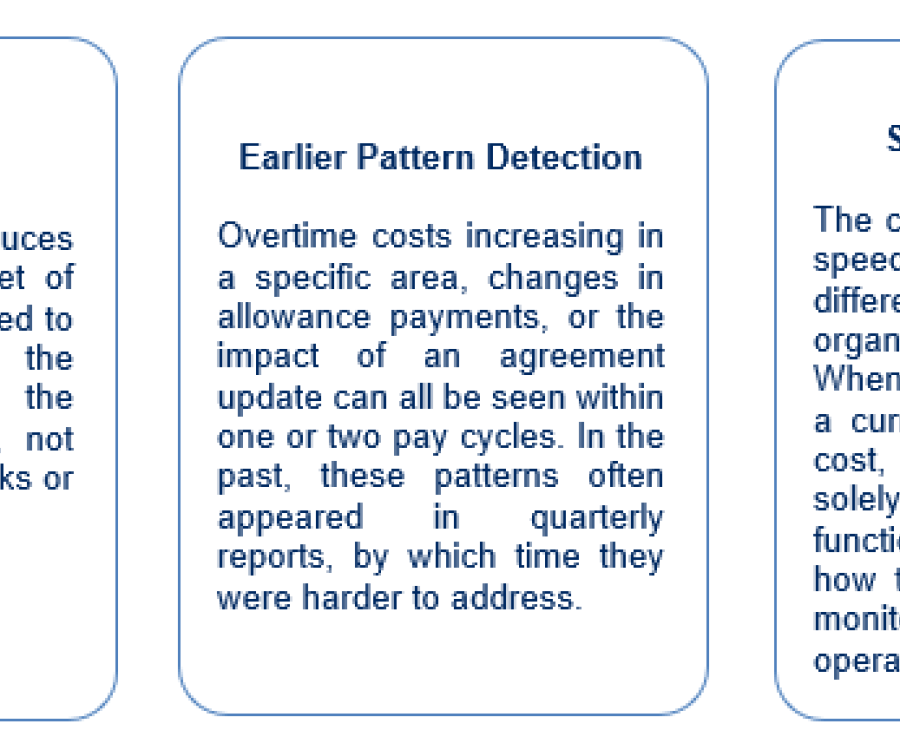
At the same time, organisations need to pay closer attention to what the data is showing them. Variances, such as unexpected increases in overtime or allowances, should be understood as they arise. Addressing these early reduces the need for rework and limits the risk of errors flowing through to super contributions or reporting.
A more commercially grounded example can be seen during enterprise bargaining. Organisations often enter negotiations with a clear view of the proposed wage increases, but less certainty around how changes to allowances, penalties, or work patterns will play out in practice. Under the previous model, the full cost impact might only become clear after several months, once payroll data had been consolidated and reviewed.
With Payday Super, that delay shortens. Once an agreement is implemented, the effect of those changes begins to appear within the first few pay cycles. If overtime usage rises in response to new rostering rules, or if allowances are applied more broadly than expected, those patterns can be identified earlier. This does not remove the need for careful modelling, but it does provide a faster feedback loop.
From a commercial perspective, this matters. Workforce cost is often one of the largest operating expenses. If cost pressures begin to emerge shortly after an agreement takes effect, organisations have a window to respond. That response might involve adjusting staffing levels, revisiting scheduling practices, or tightening the application of specific pay elements. In service-based environments, it may also prompt a review of pricing or delivery models to ensure margins are maintained.
None of these decisions are new, but the timing improves. Instead of reacting to a fully realised cost position, organisations can respond while the impact is still forming. At a governance level, the questions being asked also need to shift. Compliance remains important, but it should not be the only focus. A more useful line of enquiry is whether the organisation is using real-time payroll data to understand changes in workforce cost. Are emerging patterns being identified early enough to influence decisions? Are HR and finance working from the same numbers when they assess performance and plan ahead?
The Opportunity After Payday Super
For many organisations, this represents a shift in how the people function contributes to the business. The long-standing discussion about HR needing a stronger voice in financial planning becomes less about influence and more about information. When HR can point to current, consistent payroll data on workforce cost, it changes the nature of the conversation. It becomes easier to link people decisions to financial outcomes, using evidence that reflects current conditions.
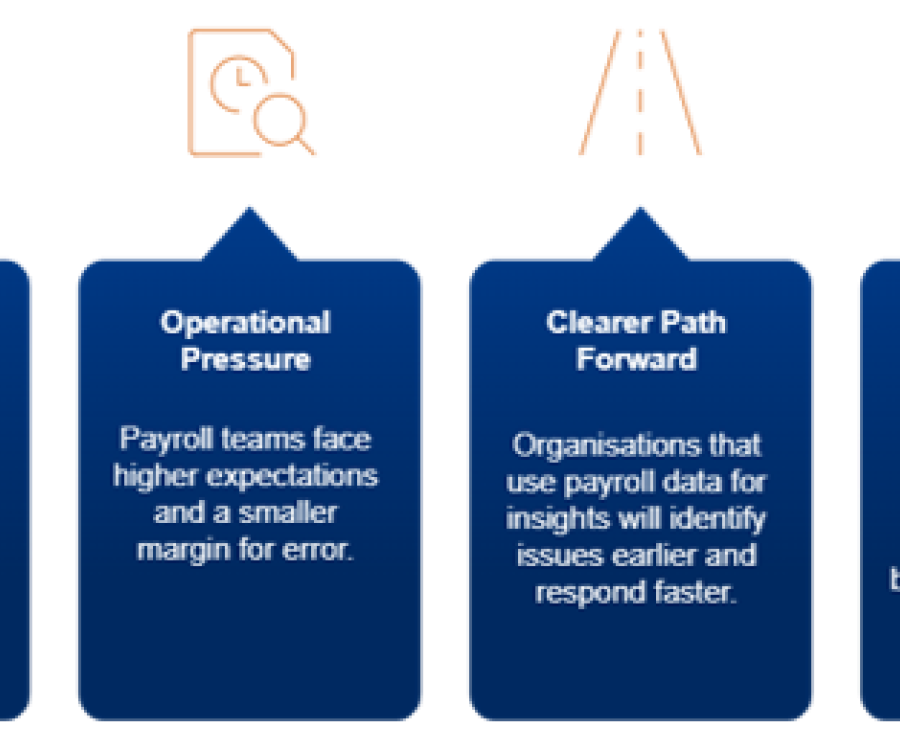
This does not remove the operational pressure on payroll teams. Expectations are higher, and the margin for error is smaller. But it does create a clearer path forward. Organisations that continue to treat payroll as a back-end process will find the new environment demanding and reactive. Those that treat each pay cycle as a source of insight will begin to see different results. They will identify issues earlier, respond more quickly, and build a clearer understanding of how workforce decisions affect cost over time.
Payday Super has introduced real-time visibility into workforce cost. Organisations that use payroll data at each pay cycle, rather than relying on retrospective reporting, will be better placed to manage cost, risk, and performance. The change is already in place. The advantage will come when HR and Finance teams choose to capitalise on it.